Africa’s first high-speed train doesn’t just connect cities—it reshapes how you travel Morocco.
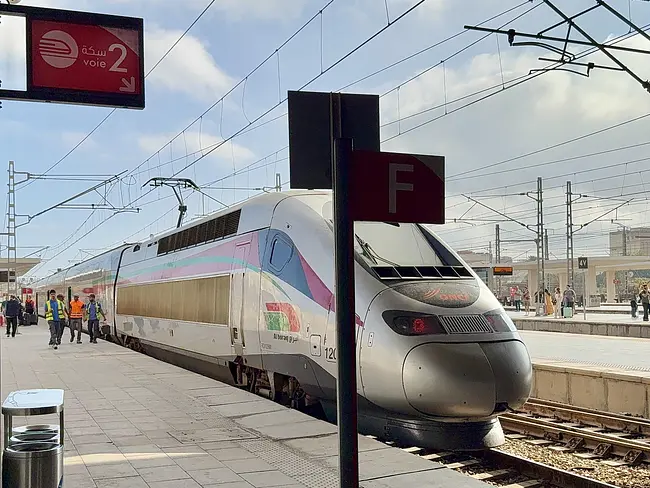
In this review, we’re taking you onboard Al Boraq, Morocco’s sleek bullet train that links Casablanca and Tangier in just over two hours. We’re sharing exactly what first class is like—from lounges and seating to food, views, and why this journey is one of the easiest (and most underrated) ways to explore the country.
We’ll also explain why Casablanca deserves more than just a quick pass-through.
Al Boraq Speed
Morocco & Al Boraq: Quick Fun Facts
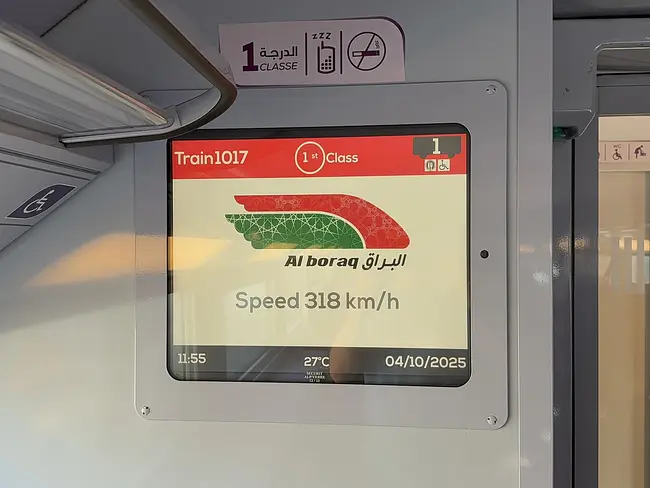
Launched in 2018, Al Boraq was the first high-speed rail service in Africa, reaching speeds of up to 320 km/h (200 mph). The name “Al Boraq” comes from Islamic tradition—the mythical winged creature said to have carried the Prophet Muhammad on his night journey—an apt name for a train that quite literally flies across Morocco.
This route connects Morocco’s economic capital with its historic northern gateway, turning what used to be a long, tiring journey into an effortless ride.
Casa Voyageurs
Casa Voyageurs Station: Where the Journey Begins
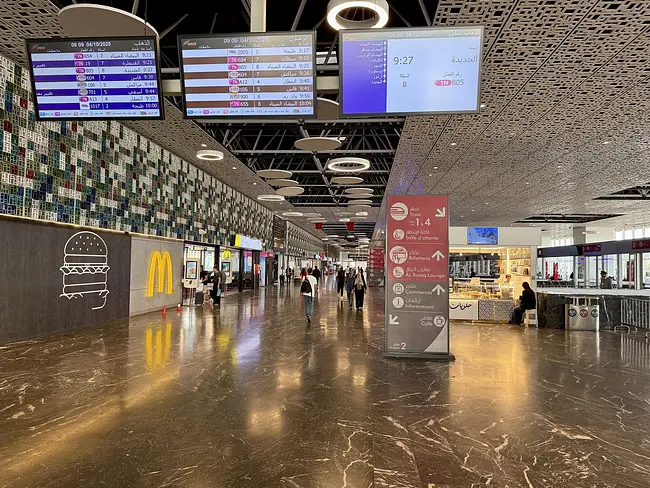
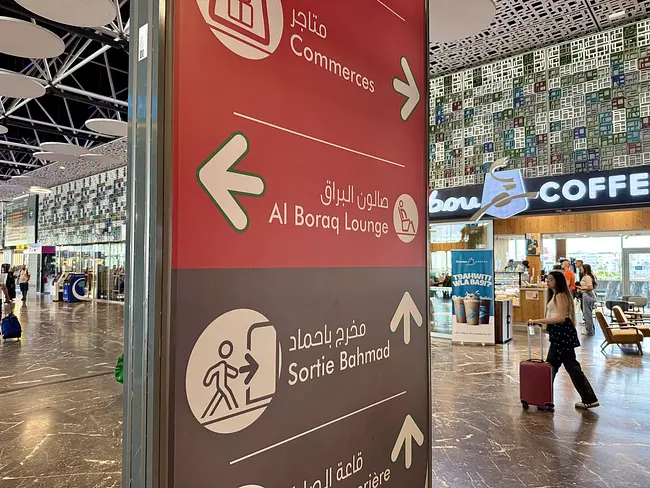
Your Al Boraq adventure starts (or ends) at CasaVoyageurs, Casablanca’s primary rail hub. If you’re expecting an old-school station, think again—this place feels more like a modern airport terminal.
Inside you’ll find cafés, bakeries, convenience shops, seating areas, and free Wi-Fi. If you’re staying near Casa Port (close to many central hotels), it’s easy to walk or take the clean, efficient Casa Tramway straight here.
Al Boraq Lounge
First Class Lounge: A Calm Start
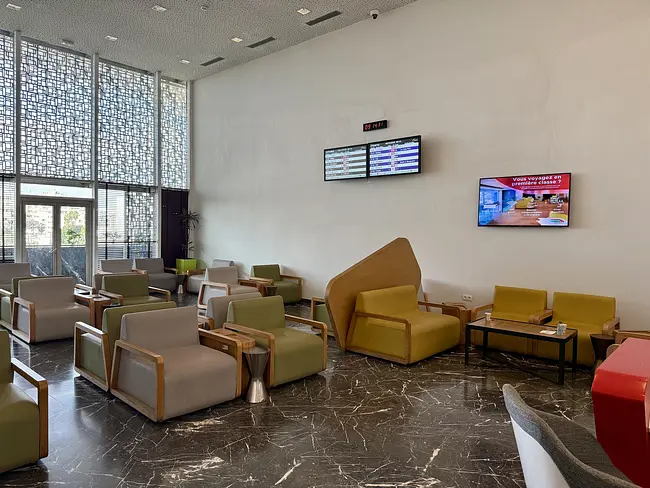
One of the best perks of booking first class is access to the Al Boraq First Class Lounge.
It’s quiet, comfortable, and refreshingly calm compared to the general waiting areas. You’ll find complimentary coffee, tea, juices, Wi-Fi, and reading material—perfect for catching up on messages or easing into the journey before boarding. There are also clean restrooms inside the lounge. It’s not flashy, but it sets the tone for a relaxed, premium experience.
Al Boraq Boarding
Boarding the Train
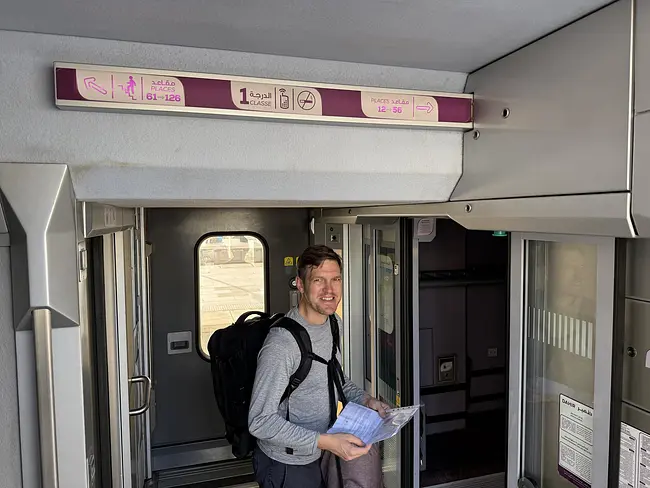
Boarding is smooth and stress-free. Platforms are clearly marked, staff are helpful, and first class carriages are easy to spot—ours was literally the first one.
Scan your ticket, step onboard, and settle in. Everything about the process—from organization to cleanliness—feels efficient and well-run.
Al Boraq First Class
Seats & Amenities: First Class Comfort
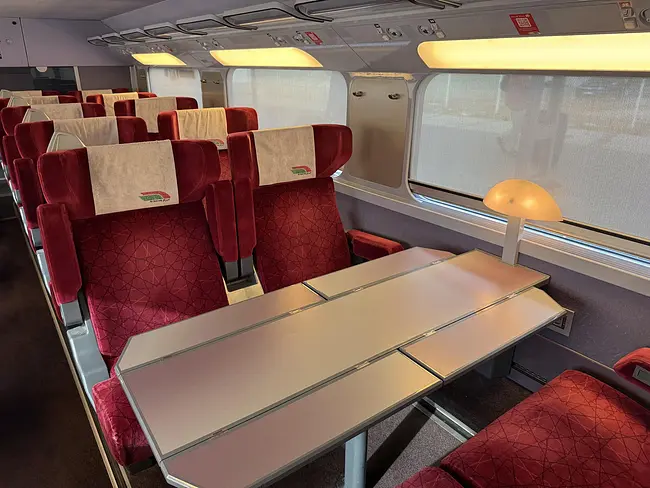
First class seating on Al Boraq is genuinely comfortable. It's set-up in a 2-1 configuration. Seats are wide with generous legroom, adjustable headrests, large armrests, and individual power outlets for charging phones and laptops.
Overhead storage easily fits backpacks and smaller bags, with luggage racks at the ends of each car for larger suitcases. Even at full speed, the ride is whisper-quiet and incredibly smooth.
Al Boraq Café
Dining Onboard
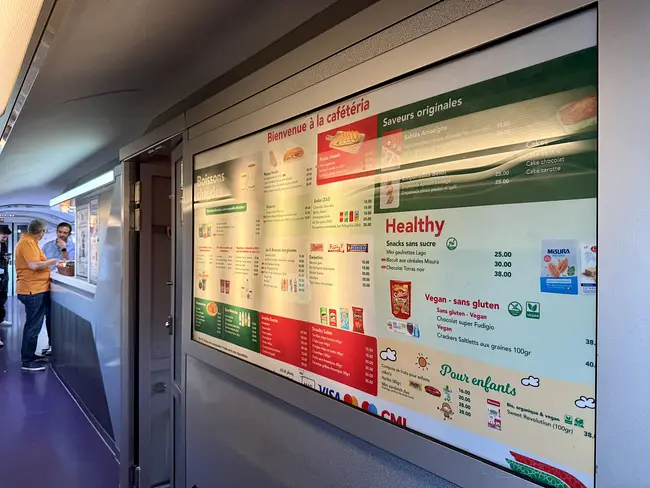
While no food or drink was offered, you can purchase snacks, sandwiches, pastries, juices, and hot drinks in the onboard café. Prices are reasonable and service appeared quick.
That said, if you’re picky about food (we are), grab something from Casa Voyageurs before boarding. The station has excellent bakeries and takeaway options that easily beat train snacks.
Scenic Highlights Along the Way
This route offers some surprisingly beautiful scenery.
Departing Casablanca, you’ll pass through Rabat, Morocco’s capital, and Kenitra before landscapes open up into greener countryside. As you approach Tangier, rolling hills and coastal scenery begin to appear—a visual reminder of Morocco’s geographic diversity.
It’s not a nonstop sightseeing spectacle, but it’s never dull—and it beats flying any day.
Casa Voyageurs
Tickets, Booking & Travel Tips
We booked tickets using Rail Ninja and 12Go for different train segments of our Morocco journey. Both platforms worked well and delivered e-tickets once seats were released. We found there to be zero difference between these two platforms.
Booking directly through ONCF can be tricky—especially from outside Morocco—and may require a VPN. It was also unclear when certain routes would come online for sale. For simplicity, we were happy to pay the considerable markup for third-party booking to avoid the hassle. We paid €98 for two first class tickets (face value was 600 MAD for the two or about €55).
Timing: The Casablanca–Tangier journey clocks in at about 2 hours and 15 minutes, cutting older train travel time nearly in half.
🌟 Pro tip – Always carry travel insurance. We recommend SafetyWing to cover everything from lost luggage to unexpected medical expenses abroad.
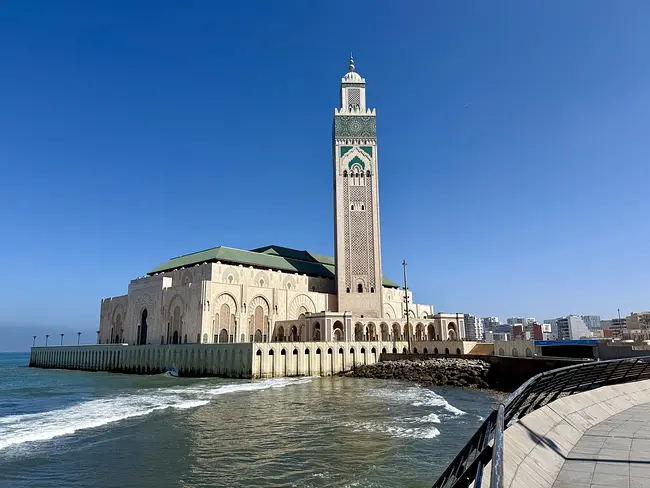
Hassan II Mosque
Why You Shouldn’t Skip Casablanca
Casablanca often gets skipped, but spending a week here completely changed our perception.
Highlights for us included sunset cocktails at the Royal Mansour rooftop overlooking the Hassan II Mosque, dinner at Iloli for elevated Japanese cuisine, and an evening at Rick’s Café—touristy, yes, but undeniably fun.
Mornings at La Sqala in its garden courtyard were a standout, and strolling the Corniche with lunch at Le Cabestan delivered relaxed oceanfront vibes. Casablanca felt modern, spacious, and grounding—a great place to recharge between Morocco’s more intense destinations.
If you want to dive deeper, we’ve put together a complete Gay Travel Guide to Casablanca covering where to stay, top things to do, where to eat and drink, and practical travel tips. And since this train journey ends in Tangier, don’t miss our Gay Travel Guide to Tangier as well—another wildly cinematic city with rich history, incredible dining, and a totally different coastal energy.
Final Thoughts
Riding Al Boraq made Morocco feel smaller, more connected, and surprisingly easy to navigate.
From Marrakech to Essaouira, Casablanca to Tangier, this country continually surprised us—and experiencing Africa’s first high-speed train was a standout highlight. Comfortable, efficient, and scenic, Al Boraq is hands-down the best way to travel Morocco’s main corridor.
Whether you’re a train lover or simply want the easiest way to move between cities, this journey is 100% worth it.
🌟 Pro tip – Planning a trip Morocco? From the best LGBTQ+ friendly hotels to must-visit attractions, dining, and travel tips, find it all in our gay travel guides to the following cities: Essaouira, Marrakech, Casablanca, and Tangier.
Found this post useful?
The easiest way to support Two Gay Expats is to
subscribe
(free!) to our YouTube channel and tell your friends and family about us to help us grow (also free)!
And if you find our content helpful and/or entertaining, please consider joining our
Channel Membership
on YouTube to directly support our videos
or
Patreon
to gain access to exclusive behind-the-scenes content.
Did we get something wrong?
Has a business we highlighted closed or perhaps something new and fabulous opened? Are
you interested in working with us? In all cases, we'd love to hear from you! Email us at
hello@twogayexpats.com.